

🚀 ISRO – Establishment, Achievements & Complete Exam-Oriented Notes
(UPSC | GPSC | SSC | Railway | Defence | State Exams)
🔹 1. Establishment of ISRO (સ્થાપના)
📌 Basic Facts
- Full Name: Indian Space Research Organisation
- Established on: 15 August 1969
- Founder: Dr. Vikram Sarabhai
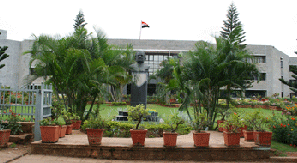
- Headquarters: Bengaluru, Karnataka
- Parent Ministry: Ministry of Electronics & Information Technology → Department of Space
- Chairman (Post): ISRO Chairman (also Secretary, Department of Space)
🎯 Vision Behind Establishment
- Use space technology for national development
- Applications in:
- Communication
- Weather forecasting
- Disaster management
- Navigation
- Rural & socio-economic development
🔹 2. Objectives of ISRO (ઉદ્દેશો)
- Develop indigenous satellite launch capability
- Build satellites for communication, navigation & earth observation
- Promote space science research
- Reduce dependence on foreign space agencies
- Support Make in India & self-reliance (Atmanirbhar Bharat)
🔹 3. Major Launch Vehicles (Exam Favourite)
| Launch Vehicle | Key Use | Special Point |
|---|---|---|
| PSLV | Light & medium satellites | “Workhorse of ISRO” |
| GSLV | Heavy satellites | Uses cryogenic engine |
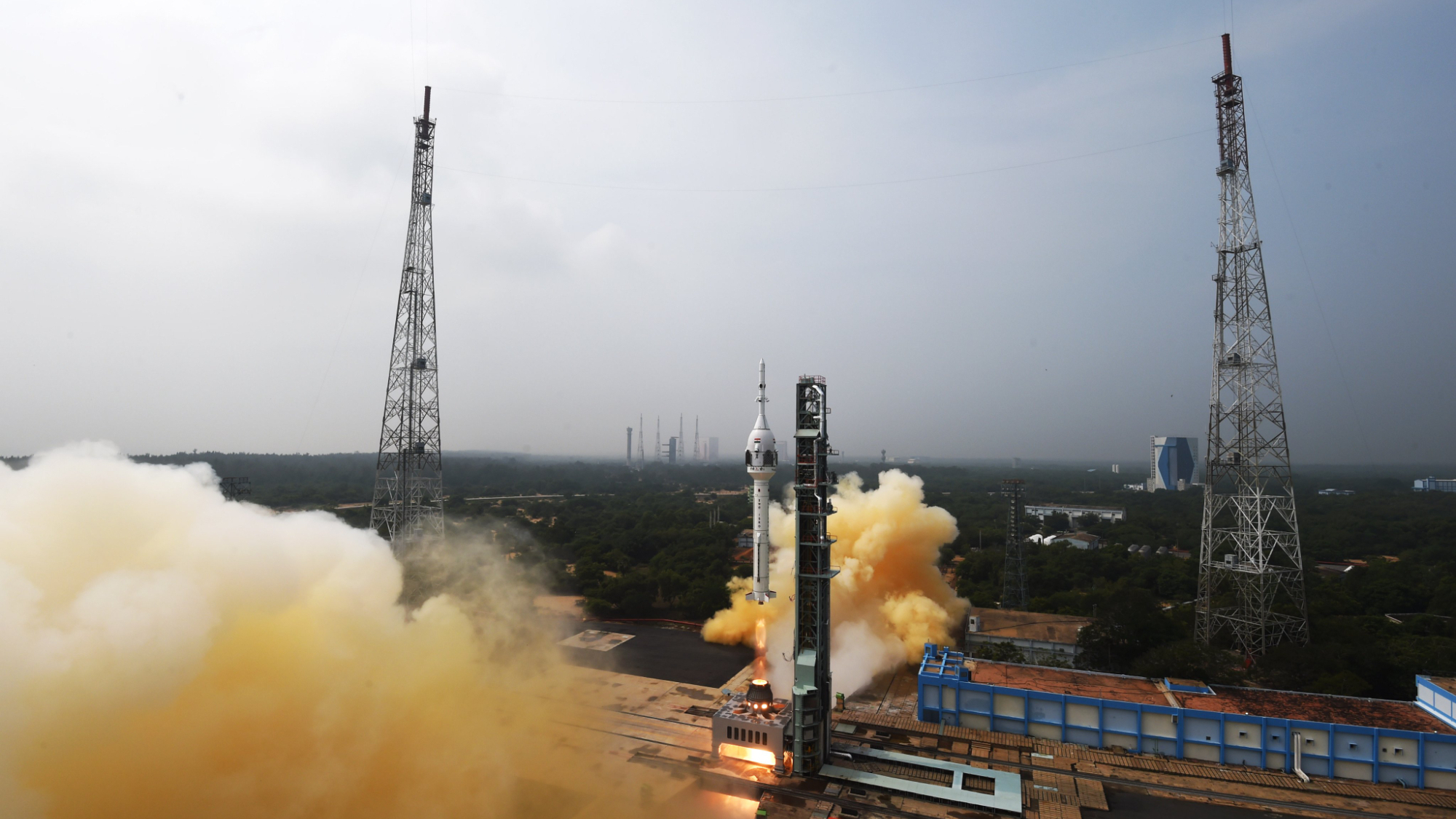
| LVM3 (Gaganyaan) | Human spaceflight | India’s crewed mission |
| SSLV | Small satellites | Low cost, quick launch |
🔹 4. Important Satellite Series
📡 Communication
- INSAT / GSAT – TV, telecom, weather
🌍 Earth Observation
- IRS Series
- Cartosat – Mapping
- Resourcesat – Natural resources
- RISAT – Radar imaging (all-weather)
🧭 Navigation
- NavIC (IRNSS) – India’s own GPS system
🔹 5. Landmark ISRO Missions (Very Important)
🌕 Chandrayaan Programme
- Chandrayaan-1 (2008): Discovery of water molecules on Moon
- Chandrayaan-2 (2019): Orbiter successful
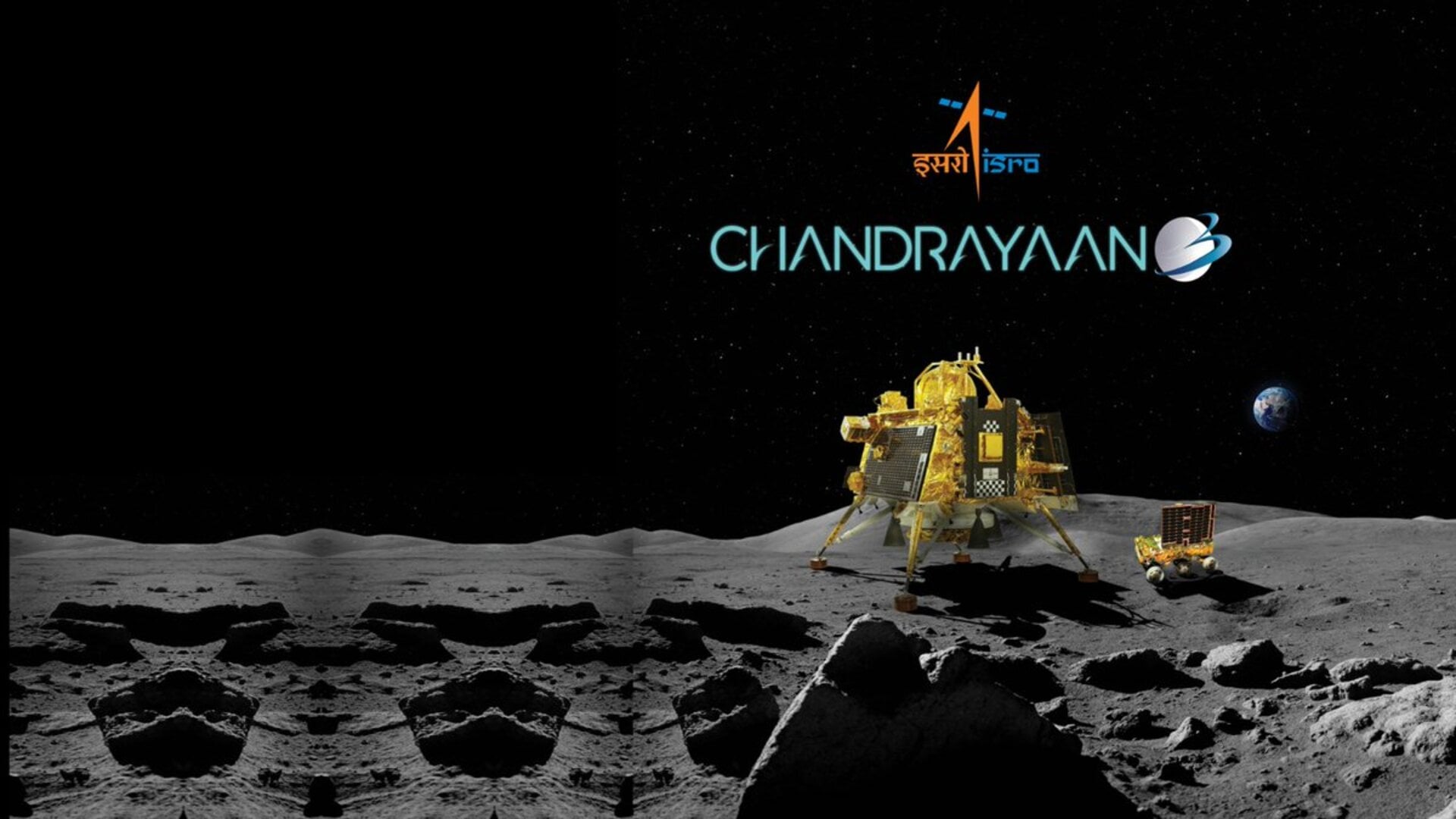
- Chandrayaan-3 (2023):
- India became 1st country to land near Moon’s South Pole
- India became 4th country to soft-land on Moon
🔴 Mars Mission
- Mangalyaan (2013)
- India = 1st country to reach Mars in first attempt
- Lowest cost interplanetary mission
👨🚀 Human Spaceflight
- Gaganyaan Mission
- Aim: Send Indian astronauts to space & bring them back safely
🔹 6. International Achievements
- Launched satellites of 100+ countries
- Record: 104 satellites in single mission (2017)
- Commercial launches via NSIL
🔹 7. ISRO Centres (Static GK)
| Centre | Location | Function |
|---|---|---|
| VSSC | Thiruvananthapuram | Launch vehicle |
| SDSC SHAR | Sriharikota | Launch site |
| URSC | Bengaluru | Satellite design |
| SAC | Ahmedabad | Payloads |
| LPSC | Kerala | Propulsion |
🔹 8. Role of ISRO in National Development
- Cyclone & weather warnings
- GPS for fishermen (NavIC)
- Tele-education & tele-medicine
- Border surveillance & disaster response
🔹 9. Current Focus Areas
- Gaganyaan
- Space station (future)
- Reusable Launch Vehicle (RLV)
- Small satellite launches
- Private sector participation (IN-SPACe)
🔹 10. Exam Ready One-Liners
- ISRO established in 1969
- Founder of ISRO – Dr. Vikram Sarabhai
- HQ – Bengaluru
- PSLV known as Workhorse of ISRO
- Chandrayaan-3 landed near Moon’s South Pole
- NavIC = Indian regional navigation system
🧠 UPSC / GPSC Mains – 3 Line Answer
ISRO is India’s national space agency established in 1969 to harness space technology for development and security. Through cost-effective missions like Mangalyaan and Chandrayaan-3, ISRO has enhanced India’s global standing in space science while supporting communication, navigation, and disaster management.